
Interview with the Management Board of Energie AG Oberösterreich
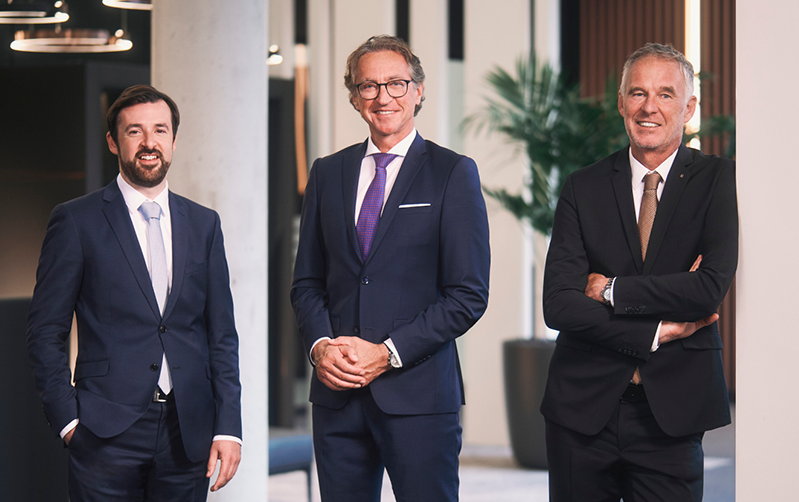
Management Board from left to right: Dipl.-Ing. Alexander Kirchner MBA, Member of the Management Board, Dr. Leonhard Schitter MA, Chair of the Management Board, Dr. Andreas Kolar, Member of the Management Board
Dipl.-Ing. Alexander Kirchner MBA Member of the Management Board CTO
Dr. Leonhard Schitter MA Chair of the Management Board CEO
Dr. Andreas Kolar Member of the Management Board CFO
Video statements of the members of the Management Board are available as part of the online version of the annual report: www.energieag.at/annualreport
How can stability be ensured in a market environment that remains volatile, while at the same time developing new potentials for growth in the fields of decarbonisation and digitalisation?
Leonhard Schitter: The market environment in which we operate continues to be characterised by geopolitical tensions, price volatility and regulatory changes. Our response is to ensure resilience by means of diversification and focusing on value. Over the past few years, Energie AG has broadened its earnings base to include generation, grids, the environment and telecommunications, in doing so creating a solid foundation that compensates for fluctuations.
At the same time, we have been making targeted investments in developments of tomorrow that promise long-term growth and that help drive the company’s decarbonisation. These include renewable energies, heat and recycling solutions, and the digitalisation of our business processes. Integrating digital technologies in every area of the company enables us to make forward-looking, data-driven decisions and to remain competitive.
Our understanding of stability is not inertia, but instead the ability to shape change. We invest in areas that hold promise for the future, while at the same time taking care to ensure that each decision is a sound one and creates long-term value. This is how Energie AG maintains its position as a company built on solid foundations and a clear outlook for the future: true to its values and dynamic in its development.
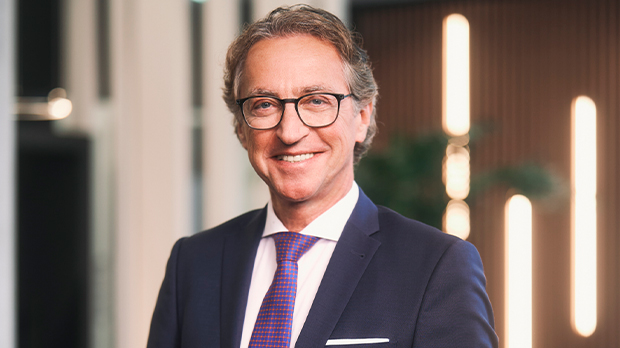
“Our LOOP strategy is the compass for our transformation. It combines economic strength with climate change mitigation and social responsibility. In 2024/25 we have picked up the pace: we are investing specifically in renewable generation, grids and the circular economy, thereby creating a stable foundation for the future of energy. What we want to achieve is clear: act reliably, grow sustainably and shape the energy transition with conviction.”
How will the Group's investment strategy – focusing on grids and generation – be funded and sustainably managed?
Andreas Kolar: Our investment strategy has a clear goal, namely the sustainable expansion of energy infrastructure and commitment to the transformation towards climate neutrality. To fund this, we rely on a balanced financing structure that combines strong equity, robust cash flow and long-term borrowing.
An important focus here is placed on ensuring balance sheet stability and maintaining a healthy debt-to-equity ratio, a fact underscored by our strong A rating from S&P.
Investments in the grid and generation activities are supported by a combination of funds generated from operations, targeted capital market financing, and EU and federal subsidy programmes. All the while, we ensure that our financial and sustainability strategies are closely aligned, for example by gradually integrating ESG criteria into our financing decisions.
We employ strict investment controlling practices to manage investment projects sustainably, taking into account both return and sustainability matters. This is how we ensure that the resources we use create not only economic value, but also environmental and social value – in the interests of long-term, stable and responsible corporate development.
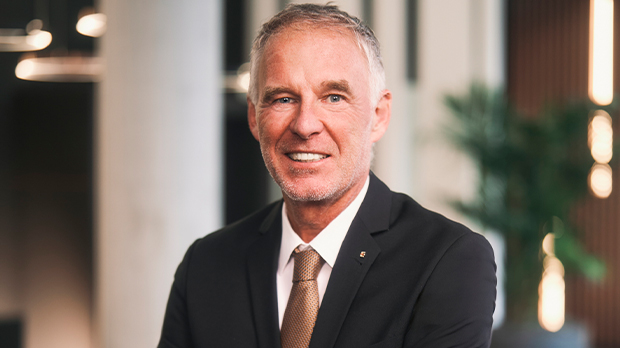
“Digitalisation creates a basis to make processes more efficient, sustainable and customer-oriented – and thus to generate real value for the Group. By closely linking digitalisation initiatives with strategic areas of action, such as expanding grids and generation capabilities, focusing on customers and sustainability, we ensure that technological innovations make a targeted contribution to the company’s strategy.”
What are Energie AG’s priorities in terms of developing generation, grids and storage capabilities so as to drive the energy transition from a technical and infrastructural perspective?
Alexander Kirchner: The success of the energy transition hangs on having an efficient, flexible and intelligently controlled energy system. This is why we at Energie AG are focusing on three core pillars of development: generation from renewable sources, grid infrastructure and storage solutions.
As regards generation, the focus is on hydroelectric power, photovoltaics and wind power – both through new projects and the modernisation of existing plants. Projects such as the Traunfall power plant and the agrivoltaic facility in Mining are examples of our strategy to combine regional value creation with technological progress.
At the same time, we are investing heavily in bolstering and digitalising the grids in order to integrate the increasing feed-in of volatile generation in a safely and stable way. Intelligent grid control, sector coupling and storage technologies – such as the Ebensee pumped-storage power plant or our energy storage facility in Timelkam – are key components in ensuring security of supply and flexibility in the energy system.
In the heating sector, we are driving forward decarbonisation by expanding our district heating networks and increasing the use of renewable and industrial waste heat. This is creating an integrated energy system that combines electricity and heat, laying the technical foundation for a climate-neutral future for energy.
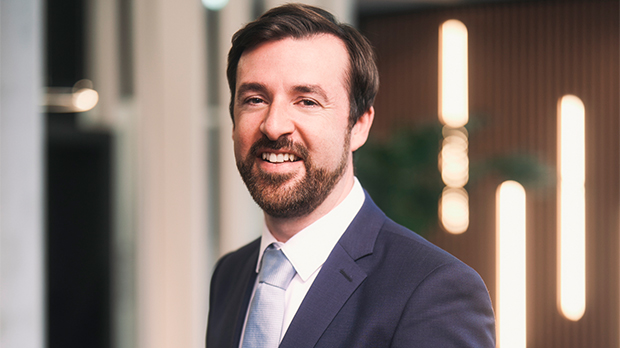
“The energy transition will only succeed if we think about energy and resources collectively. At Energie AG, we combine technical infrastructure with responsible use of resources. By investing in renewable generation, smart grids, heating solutions and the circular economy, we are creating a system that brings together security of supply, efficiency and sustainability. Our aim is to actively shape the transformation and develop solutions that are both environmentally and economically sound – for our customers, the region and future generations.”
What progress was made with the LOOP strategy and the ongoing transformation programmes in the 2024/25 fiscal year in terms of reconciling climate neutrality, security of supply and economic efficiency?
Leonhard Schitter: Our aim with the LOOP strategy is to decarbonise the entire energy and recyclable materials cycle. In the 2024/25 fiscal year, we were able to achieve key milestones and significantly pick up the pace in efforts to expand renewable energies, particularly in the areas of photovoltaics, wind and hydroelectric power. One example of this is the groundbreaking ceremony for the Traunfall power plant, representing an investment of around EUR 190 million in the future of regional renewable energy generation. The expansion of heating networks also makes an important contribution to the regional energy transition.
At the same time, we are constantly working to modernise our technical infrastructure in the Grid and Generation business units, thereby ensuring top-level security of supply. In the environment business, we are doing our bit to promote the circular economy with energy-efficient facilities and new recycling methods. At the same time, we are diversifying our business models for our customers – including in the field of e-mobility – thereby creating new value along the entire energy and resource chain.
LOOP is also firmly integrated into our corporate governance. Sustainability is an integral part of all decision-making processes. LOOP has evolved from a strategy initiative to a real framework for transformation, combining environmental responsibility with economic strength to make Energie AG resilient and able to face the challenges of the coming decades.
How can the Group’s digital transformation be successfully integrated with the economic targets and strategic development of Energie AG?
Andreas Kolar: We do not view digital transformation as a standalone IT project, but rather as a key lever for implementing our strategic and economic objectives. Digitalisation creates a basis to make processes more efficient, sustainable and customer-oriented – and thus to generate real value for the Group.
By closely linking digitalisation initiatives with strategic areas of action, such as expanding grids and generation capabilities, focusing on customers and sustainability, we ensure that technological innovations make a targeted contribution to the company's strategy. Projects are evaluated using clearly defined economic and benefit criteria and managed in a Group-wide digital portfolio. We are also investing in data skills, automation and cybersecurity to improve efficiency and boost the resilience of our value chains.
From a financial standpoint, our guiding principle is that digitalisation must create measurable added value – whether this be through productivity gains, cost transparency, higher levels of customer satisfaction or by optimising investment decisions. This means that digitalisation initiatives are closely linked to our budget and controlling processes. This way we ensure that technological innovations are in line with the Group’s business KPIs.
What role does the circular economy play in Energie AG’s area of responsibility, and how do modern installation and waste management technologies contribute to conserving resources and closing material cycles?
Alexander Kirchner: We see the circular economy as an integral part of the energy transition. In our environmental services business, we are constantly working to close material cycles and efficiently recycle valuable resources. Modern facilities in the areas of waste treatment, sorting and incineration enable us to generate energy from waste materials while reducing CO2 emissions.
One focus is on combining energy and material cycles: waste that can no longer be recycled is used to generate energy in highly efficient installations. The heat generated here flows back into our district heating systems and replaces fossil fuel energy sources. At the same time, we are investing in innovative technologies to reclaim metals, plastics and mineral substances to return secondary raw materials to the business cycle.
This is yet another way that we help conserve resources and make a contribution to regional value creation. Dovetailing energy generation and the circular economy strengthens our position as a sustainable infrastructure service provider and is a key lever for the transition to a carbon-free energy system.
How does Energie AG promote a corporate culture that sees change as an opportunity and drives the energy transition from within the company?
Leonhard Schitter: Change always begins deep within an organisation. What we want to do is foster a corporate culture that combines openness and responsibility with the courage to keep developing. With our cultural compass, we provide guidance in a time when macroeconomic conditions and requirements are constantly changing. It stands for values such as trust, transparency and personal responsibility – fundamentals that enable our employees to see change as an opportunity and actively shape it.
We invest specifically in management development, training and internal networking in order to encourage cooperation across units and national borders. Formats such as the innovation board promote a dialogue and support a learning organisation that takes up ideas and develops them further. At the same time, we ensure that the compatibility of family, career, health and safety is a feature of everyday working life – because only those who feel comfortable in their work can also support change.
This creates a corporate culture that truly shapes the future – with commitment, responsibility and a common goal: to make the energy transition a reality thanks to our own efforts.