Energy Segment
|
|
Unit |
|
2024/25 |
|
2023/24 |
|
Change |
|---|---|---|---|---|---|---|---|---|
Total sales |
|
EUR mill. |
|
1,864.3 |
|
2,259.6 |
|
-17.5% |
EBIT |
|
EUR mill. |
|
211.5 |
|
318.6 |
|
-33.6% |
Investments in property, plant and equipment and intangible assets |
|
EUR mill. |
|
154.7 |
|
101.0 |
|
53.2% |
Workforce (on average) |
|
FTE |
|
473 |
|
461 |
|
2.6% |
Electricity procurement incl. electricity procured from third parties |
|
GWh |
|
9,165 |
|
10,082 |
|
-9.1% |
Electricity production |
|
GWh |
|
2,784 |
|
3,116 |
|
-10.7% |
Electricity sales volume |
|
GWh |
|
5,134 |
|
5,580 |
|
-8.0% |
Gas sales volume |
|
GWh |
|
4,564 |
|
4,235 |
|
7.8% |
Heat procurement |
|
GWh |
|
1,169 |
|
1,187 |
|
-1.5% |
Heat sales volume |
|
GWh |
|
1,072 |
|
1,076 |
|
-0.4% |
Economic framework conditions for the energy sector 1)
Price development on international energy markets
Sources: EEX, ICE
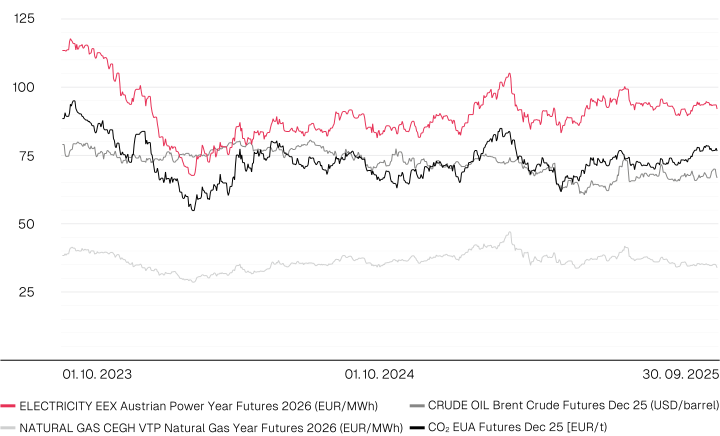
The forward market price of electricity for supply in Austria in 2026 averaged EUR 90.35/MWh over the reporting period, just over 3.0% above that of the same period last year. Prices moved laterally in a high and volatile bandwidth in the first quarter; the lowest value being EUR 80.71/MWh in early November 2024. By mid-February 2025 prices rose to a peak of EUR 103.93/MWh. This was followed by a rapid downward trend, which reverted to a lateral movement with a high bandwidth and volatility. The main influencing factors here were the prices for coal, gas and CO2 emission allowances as well as the macroeconomic development. The price at the end of the 2024/25 fiscal year was EUR 90.95/MWh, just above the average price of the previous year. On the spot market, prices rose by around one third compared with the same period of the previous year. The average European Power Exchange (EPEX) spot price base for delivery in Austria in the reporting period was EUR 99.50/MWh with a volatile development with fluctuations ranging between EUR -252.60/MWh and EUR 850.00/MWh. During the reporting period, the spot price was below EUR 0.00/MWh for 397 hours (previous year: 308 hours) due to the increasing frequency of negative residual loads.
The price of natural gas for delivery in Austria in 2026 was at an average value of EUR 37.32/MWh in the reporting period (previous year: EUR 34.58/MWh) in the field of tension between geopolitical crises and dampening factors such as diversification of supply sources, high storage levels and uncertain economic development. After reaching a high of EUR 46.59/MWh in February 2025, the price had dropped to EUR 33.38/MWh by the end of April 2025. After a slight recovery, prices moved sideways, closing at EUR 33.52/MWh at the end of the fiscal year.
Prices for CO2 emissions allowances fluctuated at an average value of EUR 71.57/t (previous year: EUR 72.60/t) between EUR 83.93/t at the end of January and EUR 60.94/t at the beginning of April 2025. Prices subsequently recovered and ended the fiscal year 2024/25 at EUR 75.74/t.
Business development in the Energy Segment
At EUR 1,864.3 million, sales revenues in the Energy Segment were EUR 395.3 million below the previous year's figure. In addition to lower earnings in the management of the electricity and gas portfolio, driven by wholesale prices that were below those of the previous year- period, the decrease was attributable to declining electricity sales volumes and lower sales prices in the Sales unit. At EUR 211.5 million, the operating result was lower than in the same period last year (previous year: EUR 318.6 million).
EBIT was impacted by lower water levels leading to lower electricity generation volumes from proprietary hydropower plants and procurement rights of hydroelectric power, as well as by declining market prices in the generation business. In addition, the legally prescribed absorption of revenue from the sale of electricity in line with the Federal Act on the Energy Crisis Contribution for Electricity had a negative impact on operating results. In contrast to this, the EBIT of the previous year was impacted on by serious fluctuations in wholesale prices. In addition, the comparison period of the previous year was affected by an impairment of the Timelkam CCGT power plant and other factors, whereas a reversal of impairment of EUR 3.2 million was recognised in the reporting period. Additionally, the Timelkam CCGT power plant achieved higher earnings contributions due to increased use of the power plant.
Hydropower plant production significantly below long-year average
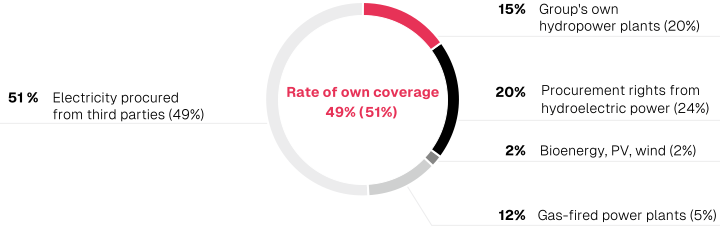
Electricity procurement in the Energy Segment in the 2024/25 fiscal year totalled 9,165 GWh and was 9.1% lower than in the previous year (10,082 GWh). The main causes of the decrease were an 8.4% reduction in external procurement of 6,381 GWh (previous year: 6,966 GWh) due to decreasing trade volumes and significantly underperforming hydroelectric power production, which was only partially compensated for by additional thermal production.
Electricity generation from renewable energy totalled 2,124 GWh, 24.0% lower than the same period last year (2,793 GWh). The decrease is mainly due to lower electricity generation from hydroelectric sources. Due to the prolonged drought, generation in the reporting period was significantly below the long-term average at 1,987 GWh, with a hydro coefficient of 0.82, and 25.0% below the previous year's above-average production (2,651 GWh). At 137 GWh electricity generated from bioenergy, PV and wind was 3.5% lower than the previous year (142 GWh).
Electricity production from thermal capacities in the Energy Segment amounted to 323 GWh, which is nearly double the previous year's value of 660 GWh. On top of congestion management operations to maintain grid stability, opportunities for market utilisation of thermal power plants with positive contribution margins again increased in the year under review.
The electricity procurement structure in the Energy Segment was as follows in the reporting period:
Electricity procurement structure without electricity trading
2024/25; previous year's figures in brackets
During the reporting period, Energie AG was a driving force behind numerous steps taken to shape a sustainable energy future. The considerable progress made in the construction of the Ebensee pumped-storage power plant is worthy of note here. The 2024/25 fiscal year saw the completion of the energy discharge tunnel and the breakthrough of the underwater feed water path. An important element of the energy transition, the Ebensee pumped-storage power plant will provide valuable flexibility to compensate for volatile PV and wind power plants and ensure grid stability.
With an investment volume of EUR 191.5 million in green energy, further milestones in the reporting period were the decision to build, and the subsequent launch of the construction works for, the new Traunfall hydroelectric plant, which will supply 35,000 households. This run-of-river power station on the river Traun will replace the existing plants at Gschröff, Siebenbrunn and the Traunfall power plant, boosting annual electricity production by 54 GWh to 125 GWh. Trial operations are intended for 2028.
Energie AG holds 50% in Ennskraftwerke AG and procurement rights in the electricity produced amounting to approximately 38%. The hydro coefficient of the electricity generated was above the long-term average at 0.81 on a pro rata basis in the 2024/25 fiscal year (previous year: 1.07). Energie AG additionally holds electricity procurement rights for the hydropower plants of Verbund Hydro Power GmbH. All told, electricity procurement rights from hydroelectric power amount to an annual standard production capacity of some 1,410 GWh.
Energie AG's wind power portfolio in Austria comprises shareholdings in four wind parks with an overall output consolidated using the equity method of 15.2 MW. Proprietary electricity generation at a pro rata basis in the reporting period was 36 GWh (previous year: 40 GWh).
In the 2024/25 fiscal year, Energie AG acquired a 45% shareholding in Windpark Kobernaußerwald FlexCo. There are plans to build 18 wind turbines with a wind power output of around 250 GWh by 2030 in the scope of the Windpark Kobernaußerwald project. The project area covers the municipalities of Lengau, Maria Schmolln, Munderfing, Schalchen and St. Johann am Walde. The EIA approval procedure is currently pending.
In the 2024/25 fiscal year, AAE Gamit, družba za proizvodnjo electrične energije, d.o.o. focused on the development of wind power and PV projects in Slovenia with a total peak output of more than 180 MW. Wind survey data for two of the three wind project areas in southern Slovenia are already available. Approval proceedings for the wind measurement mast in the third wind turbine project area are currently in progress. A decision is expected by the end of the 2025 calendar year.
Energie AG operates PV systems in Austria and Italy with a total capacity of around 37 MWp (previous year: 24 MWp). 32 GWh of electricity was generated by these systems in the 2024/25 fiscal year (previous year: 22 GWh). This figure also includes electricity from customer contracting systems. Two further PV systems were commissioned in the 2024/25 fiscal year. On the one hand, one of the largest agricultural PV systems in Upper Austria containing 7,514 modules was commissioned in Pischelsdorf. A pro rata system output of 2.4 MWp was installed in the scope of this joint project with a partner company. The second project built and commissioned a further agricultural PV plant with an output of 2 MWp at a former excavation site in Mauthausen. In addition to the PV systems currently under construction with a total output of around 20 MWp, several other projects are already in the licensing phase.
In November 2024, Erzeugung GmbH acquired 100% of the shares in Italy's ARBA 1 s.r.l.. The company is located in the municipality of Arba, near Pordenone, approximately 100 kilometres north of Venice. Construction of a PV plant with an output of around 8.1 MWp began on a 14 hectare plot during the reporting period. The installation is due to be commissioned in December 2025. With an expected annual electricity generation of around 12 GWh, the plant will supply renewable energy to approximately 3,400 households in the future.
The integration of volatile decentralised electricity generation systems and flexible consumer systems is particularly important. Energie AG Oberösterreich Erzeugung GmbH (Erzeugung GmbH) is also working on battery storage technology in order to provide flexible capacity at short notice and thereby meet the requirements of an increasingly decarbonised energy system. For example, construction of the largest battery storage facility in Upper Austria started at the Timelkam power plant. When built, the storage facility will have an output of 5 MW and a usable capacity of 14.5 MWh.
The newly built biomass heating plant was commissioned at the Riedersbach power plant location. The core element of the new heating plant is a biomass boiler with a fuel heat output of 5 MW combined with state-of-the-art flue gas treatment. The installation is complemented by a district heat storage facility with a water volume of 200 m3 and efficient flue gas condensation. The fuels used consist of natural wood chips from forestry and industrial wood chips. In addition, biomethane will completely replace the natural gas use previously required at peak load times. This biomethane is derived from indigenous biogenic raw materials such as grasses, energy crops and slurry, and makes the heat supply carbon-neutral in the long term.
In the Energie AG district heating networks, the heat volume generated by proprietary production and procurement increased by 9.2% to 427 GWh compared with the previous year (391 GWh). Of this, 55.3% originates from renewable sources, 38.2% from non-renewable sources and 6.5% from industrial waste heat. The district heating network in Freistadt has been expanded by some 2.7 km since mid 2024. The existing heating centre was expanded to include a 2.5 MW biomass boiler, a 60m3 buffer storage tank and a gas boiler as a backup reserve. Following commissioning in September 2025, the usable capacity of the heat supply grew by 4.8 GWh/a.
Cogeneration-Kraftwerke Management Oberösterreich GmbH (CMOÖ GmbH) in Laakirchen supplies a key account customer with electricity and process heat through a CCGT power plant, as well as several adjacent companies with district heating. The heat volume produced in the 2024/25 fiscal year was 602 GWh, 7.2% lower than the previous year's figure (649 GWh).
Customer proximity and attractive offers in focus
In the 2024/25 fiscal year, Energie AG Oberösterreich Vertrieb GmbH (Vertrieb GmbH) focused on the strategic topics of sustainability, electromobility and customer proximity. One specific focus was on comprehensive expansion of charging infrastructure in both urban and tourist regions and along major traffic axes. In this context, the investment in da emobil GmbH is noteworthy; this will make a decisive contribution towards the expansion of fast charging stations in Austria. Another major focus was on reducing electricity prices and boosting customer loyalty. Starting in April 2025, private and commercial customers have benefited from the new ‘Ökostrom Loyal’ tariff, which offers savings of up to just under 50.0% compared to the previous tariff. In addition, customers benefit from a price guarantee valid until March 2026. The electricity volume consumed for this purpose will be procured using a rolling procurement model. This approach helps to stabilise retail prices and delays the impact of both price increases and reductions on the international energy markets.
Furthermore, strategic actions have been taken to extend the portfolio of Vertrieb GmbH by founding EP Energie Plus GmbH, acquiring Pöchhacker Innovation Consulting GmbH, and through the ‘VT Review’ organisational development project. The ‘VT Review’ project has created the conditions to better meet the needs of customers.
In the first six months of 2024/25, the energy environment was characterised by colder weather compared to the previous year. Although the number of heating degree days in Upper Austria (this figure defines the temperature-related energy demand) was 8.4% in the reporting period, and therefore well below that of the comparable period in the previous year, this was only slightly below the average for the last five years (-3.9%).
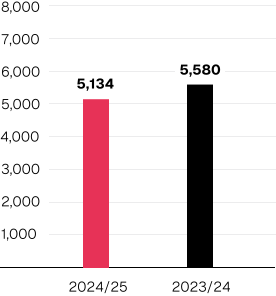
Electricity sales volume
in GWh
Electricity
The consolidated electricity sales volume of Energie AG was 5,134 GWh in the 2024/25 fiscal year. The figure is down by 446 GWh, or 8.0%, compared with the previous year's figure of 5,580 GWh.
For private and commercial customers, cool weather in the winter months led to an increase in sales in the household segment. At the start of the 2024/25 fiscal year, Vertrieb GmbH showed increased customer fluctuation; this was successfully addressed through targeted sales actions. In particular, the reduction of prices as of 1 April 2025 contributed significantly to stabilising and improving customer loyalty.
The business and industrial customer fields were characterised by challenging price and demand conditions and the weak economic climate. The continuing higher level of proprietary production by PV systems and customer participation in energy communities again significantly impacted on sales in the current fiscal year. However, the regular customer base remained broadly stable.
The founding of EP Energie Plus GmbH in the scope of a second-brand strategy laid an essential foundation for successful cooperation with a well-known Austrian trading company with a focus on 100.0% green electricity. This partnership has attracted new customers in both electricity procured from third parties and PV feed-in.
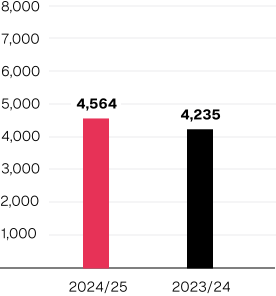
Gas sales volume
in GWh
Gas
At 4,564 GWh, the volume of gas sold by Energie AG in the past fiscal year was 329 GWh or 7.8% above the previous year's figure of 4,235 GWh.
In the case of private and commercial customers who mainly use space heating, the supply values varied in the individual months due to the weather conditions, however, supply volumes were higher in comparison with the previous year. Besides the slack economy, efficiency actions and substitutions on the customer side continued to expose sales volumes to pressure in the business and industrial customer sectors; despite this, some new contracts were concluded.
Following the founding of EP Energie Plus GmbH in the 2024/25 fiscal year, distribution of the ‘sigi’ second brand was completely discontinued with effect as of 31 March 2025. However, it proved possible to migrate many customers to the main brand.
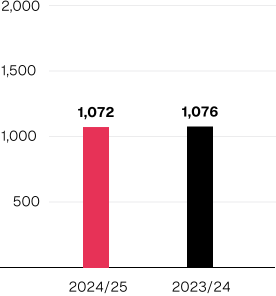
Heat sales volume Austria
in GWh
Heat
The heat sales volume of Energie AG throughout Austria in the 2024/25 fiscal year amounted to 1,072 GWh, which is a 0.4% decrease on the previous year’s figure of 1,076 GWh. In addition to the district heating sales volume and the heat sales volume supplied to customers by CMOÖ GmbH, the heat sales volume also includes the volumes from individual customer solutions provided through on-site power purchase agreements.
Telecommunications
At the end of the 2024/25 fiscal year, 23,022 customers are already actively using FTTH products offered by Energie AG. This is an increase of 1,824 customers, or 8.6% compared with the previous year's figure of 21,198. It also proved possible to attract many new customers in the business and industrial sectors, despite challenging market conditions.
Photovoltaics
At the end of the 2024/25 fiscal year, Vertrieb GmbH was operating a total of 84 PV on-site power purchase agreement installations (previous year: 76) with a total installed output of some 18.9 MWp (previous year: 12.6 MWp). The largest PV on-site power purchase agreement installation with an output of 6.5 MWp for a well-known industrial customer was successfully launched in the 2024/25 fiscal year. Energie AG offered two complete PV bundles for private and commercial customers in the form of the ‘Solar Sorglos’ and ‘Solar Sorglos Business’ service products.
Electromobility
The focus of electromobility activities during the reporting period was on expanding charging infrastructure solutions. By the end of the reporting period, Energie AG was operating 348 publicly accessible charging stations (previous year: 269) and managing operations at a total of 1,644 charging points (previous year: 1,268). By the end of the 2024/25 fiscal year, da emobil GmbH was managing 3,931 charging points. By the end of the 2024/25 fiscal year, the Energie AG charging card, which can be used throughout Austria, was in use in 5,251 active contracts (previous year: 3,933), while more than 21,500 charging points which accepted the Energie AG charging card were available throughout Austria thanks to cooperations (previous year: around 15,000).
1)
1)
Sources: EEX (European Energy Exchange AG) market data: market data (eex.com)
, 10 October 2025.
ICE (Intercontinental Currency Exchange) market data: Products – Futures & Options | ICE (theice.com), 10 October 2025.